 | And Pollution
Conflict

Explore before and after illustrations of how conflicts contribute to pollution and waste.









Fuel Fires and Toxic Smoke
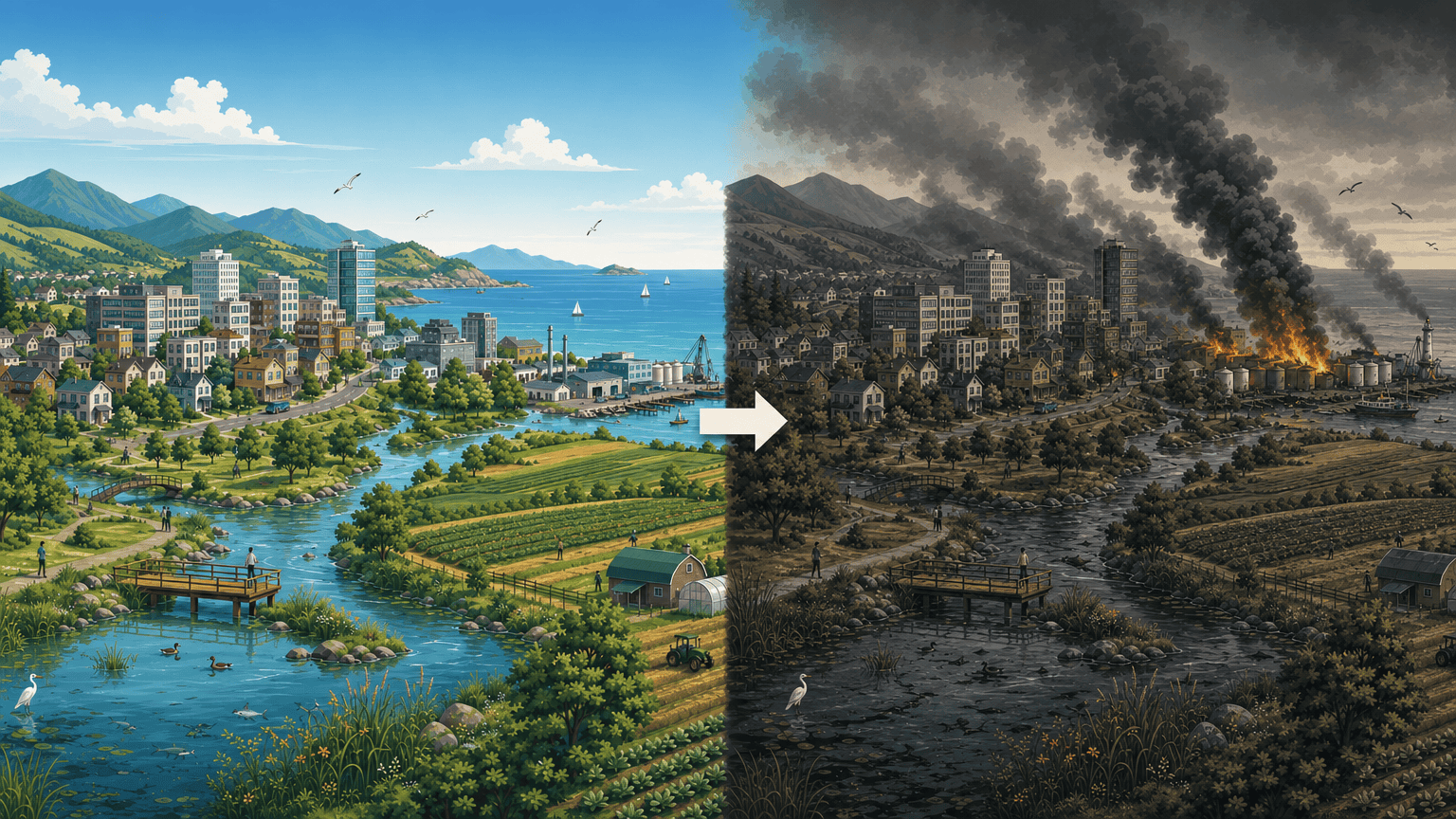
Description: Armed conflict can turn fuel depots, refineries, ports, and energy infrastructure into acute air pollution sources. Burning oil and fuel release dense smoke, soot, particulate matter, and toxic combustion byproducts that can settle onto water, soils, crops, and urban surfaces.
Real world instances: Kuwait oil well fires during the 1991 Gulf War; burning oil and fuel facilities during recent Middle East hostilities; strikes on energy and fuel infrastructure in Ukraine.
Oil Slicks Across Coasts and Wetlands
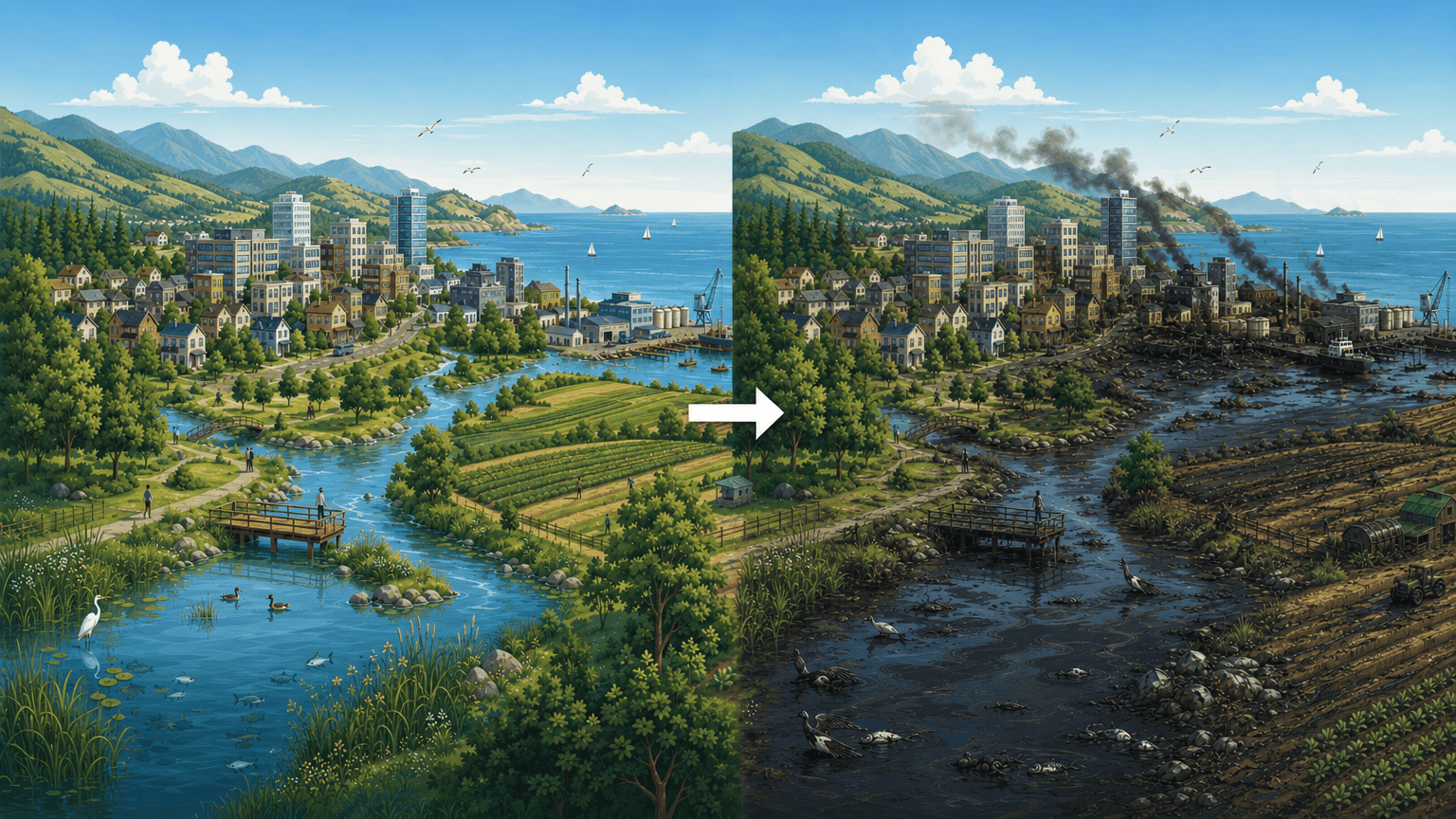
Description: When coastal fuel tanks, ports, ships, or power plants are damaged, oil can spread through harbors, beaches, wetlands, fisheries, and nearshore ecosystems. The immediate spill becomes a longer cleanup and waste-management problem as oiled debris, sediments, wildlife, and shoreline materials require careful handling.
Real world instances: Jiyeh power plant oil spill during the 2006 Israel-Lebanon conflict; Persian Gulf oil pollution during the 1991 Gulf War; reported marine oil pollution risks from recent Middle East conflict damage.
Munitions Residues in Soil and Groundwater
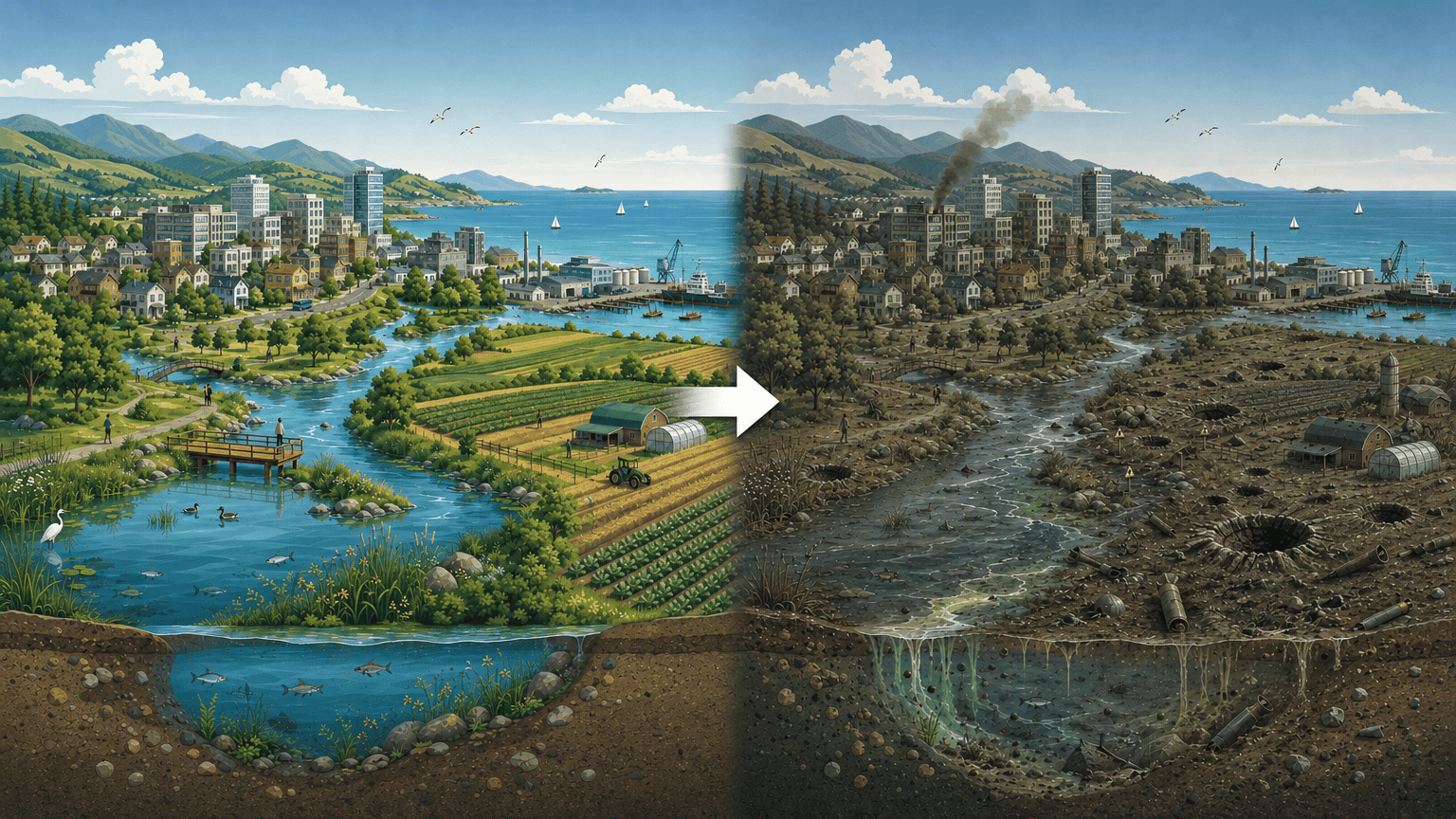
Description: Explosions do not end when the smoke clears. Shell fragments, craters, unexploded ordnance, heavy metals, and explosive residues can remain in fields, riverbanks, sediments, and groundwater pathways, turning ordinary land into a long-term contamination and clearance hazard.
Real world instances: Ukraine battlefields contaminated by unexploded ordnance, mines, and munitions residues; Gaza freshwater and marine ecosystems affected by munitions and other contaminants; Iraq and Syria post-conflict areas requiring explosive-remnant clearance.
Urban Rubble as Hazardous Waste
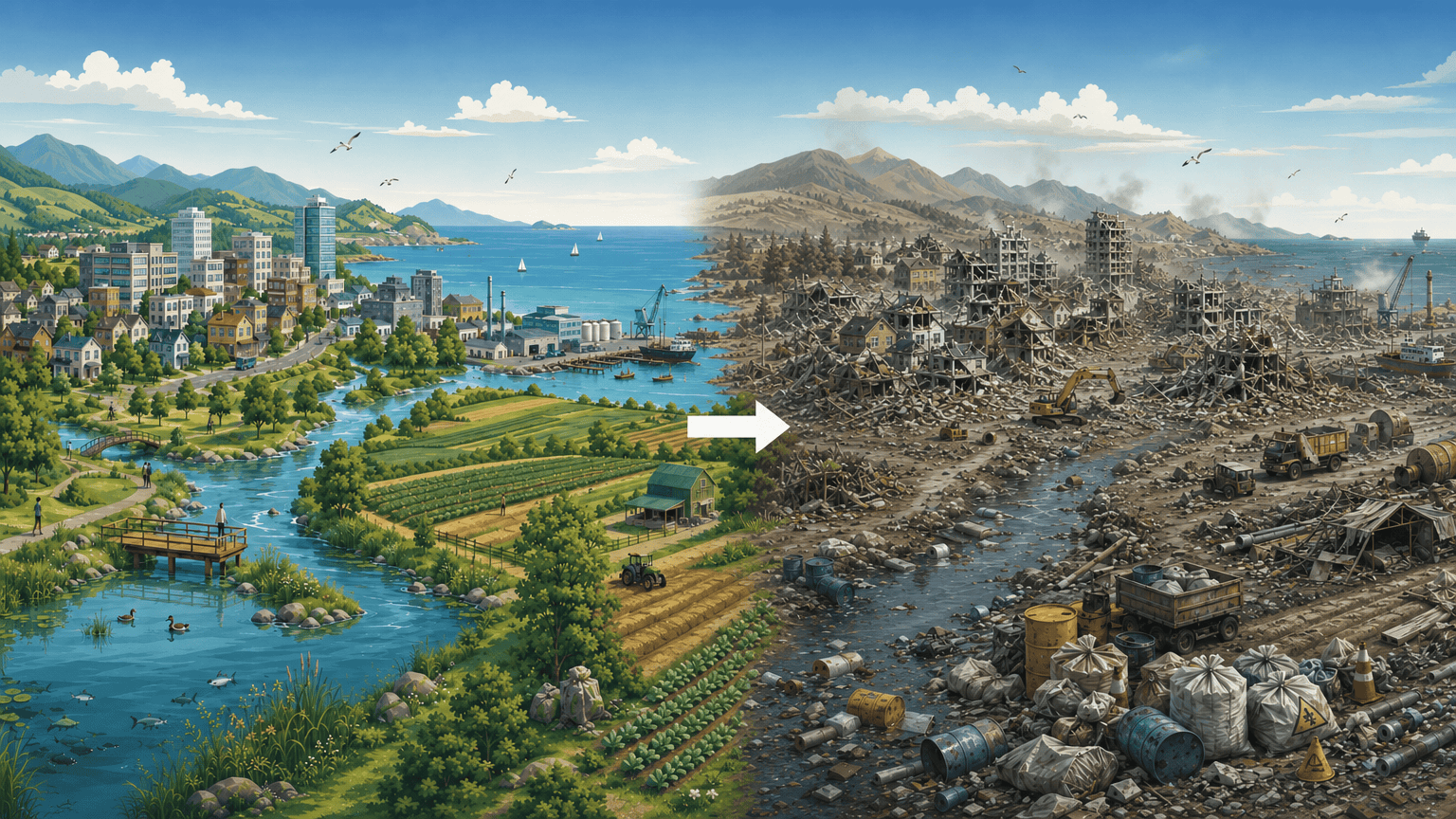
Description: Destroyed buildings become more than debris. Collapsed concrete, dust, twisted metal, asbestos-containing materials, damaged pipes, batteries, fuels, electronics, and unexploded ordnance can overwhelm waste systems and expose cleanup workers and residents to hidden hazards.
Real world instances: Gaza, where UNEP reported tens of millions of tonnes of conflict debris requiring clearance and segregation; Mosul and other Iraqi cities after urban warfare; Mariupol and other Ukrainian cities damaged by bombardment.
Broken Sanitation and Wastewater Collapse
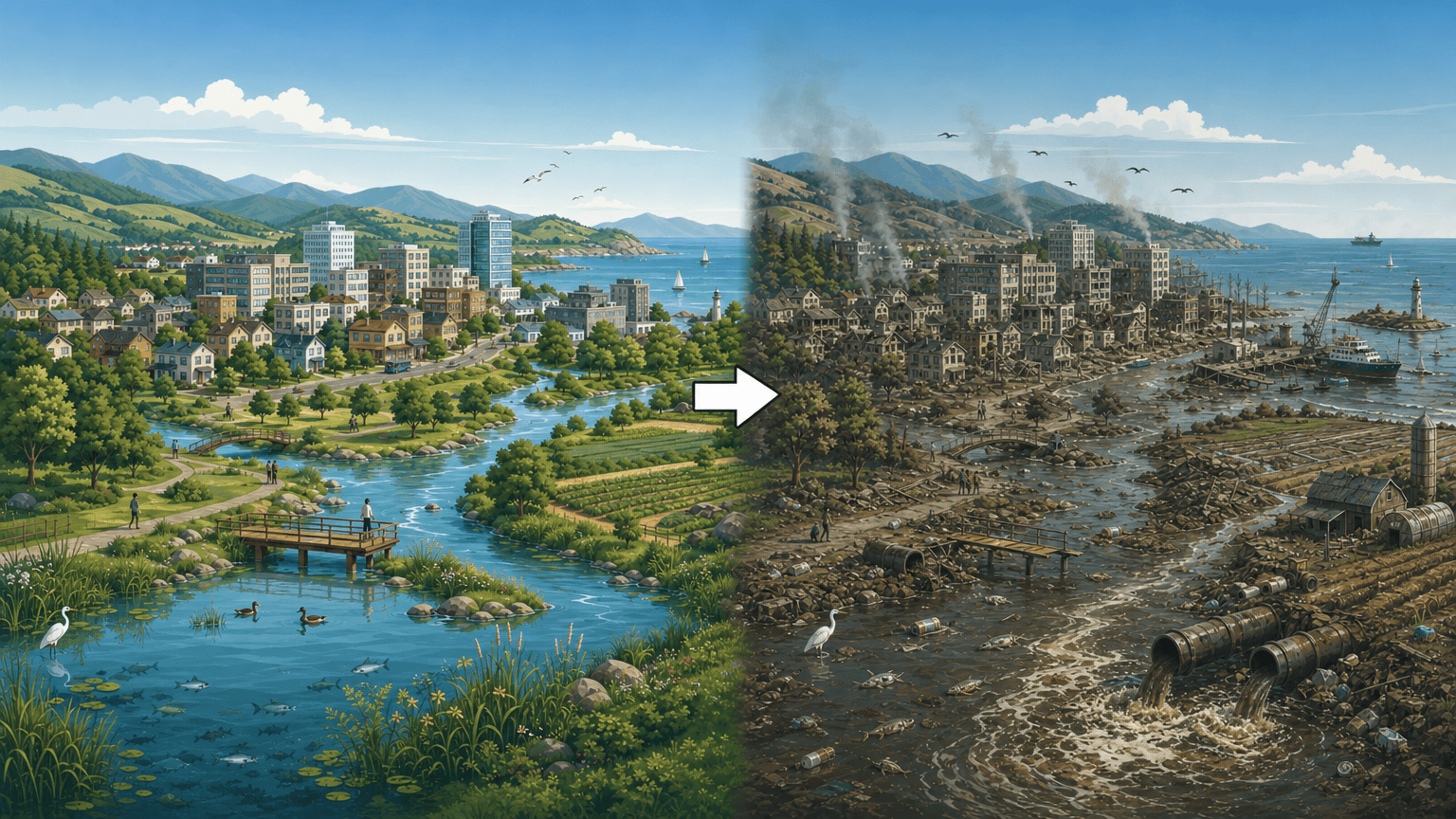
Description: Conflict can disable wastewater treatment plants, pumping stations, sewer lines, and municipal waste services. Untreated sewage and mixed solid waste then flow into rivers, wetlands, streets, and coastal waters, creating both ecological damage and public-health risk.
Real world instances: Gaza, where UN reporting has described freshwater and marine ecosystems polluted by untreated sewage and other contaminants; Yemen, where damaged water and sanitation systems have worsened public-health crises; Syria and Iraq urban conflict zones with damaged sewage and waste infrastructure.
Flood-Borne Contamination After Water Infrastructure Failure
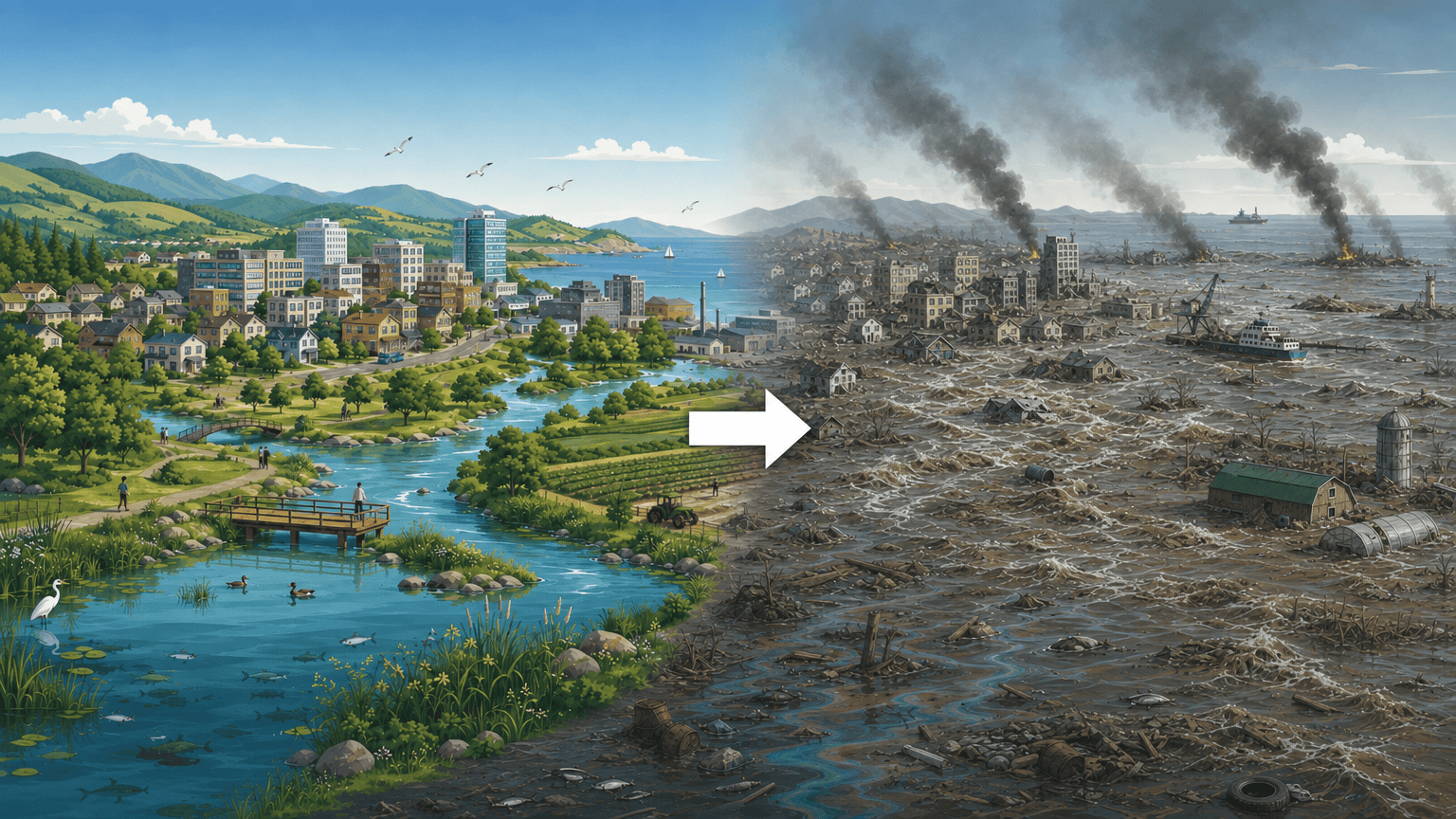
Description: When dams, reservoirs, levees, or major water infrastructure are destroyed, floodwaters can mobilize everything in their path: sewage, fuels, industrial chemicals, dead vegetation, debris, sediments, mines, and agricultural pollutants. The result is not just flooding, but moving contamination.
Real world instances: Destruction of Ukraine’s Kakhovka Dam in June 2023, which caused extensive flooding and major ecological disruption; conflict damage to water infrastructure in Ukraine, Syria, Iraq, and Yemen.
Contaminated Fields, Food Chains, and Ecosystems
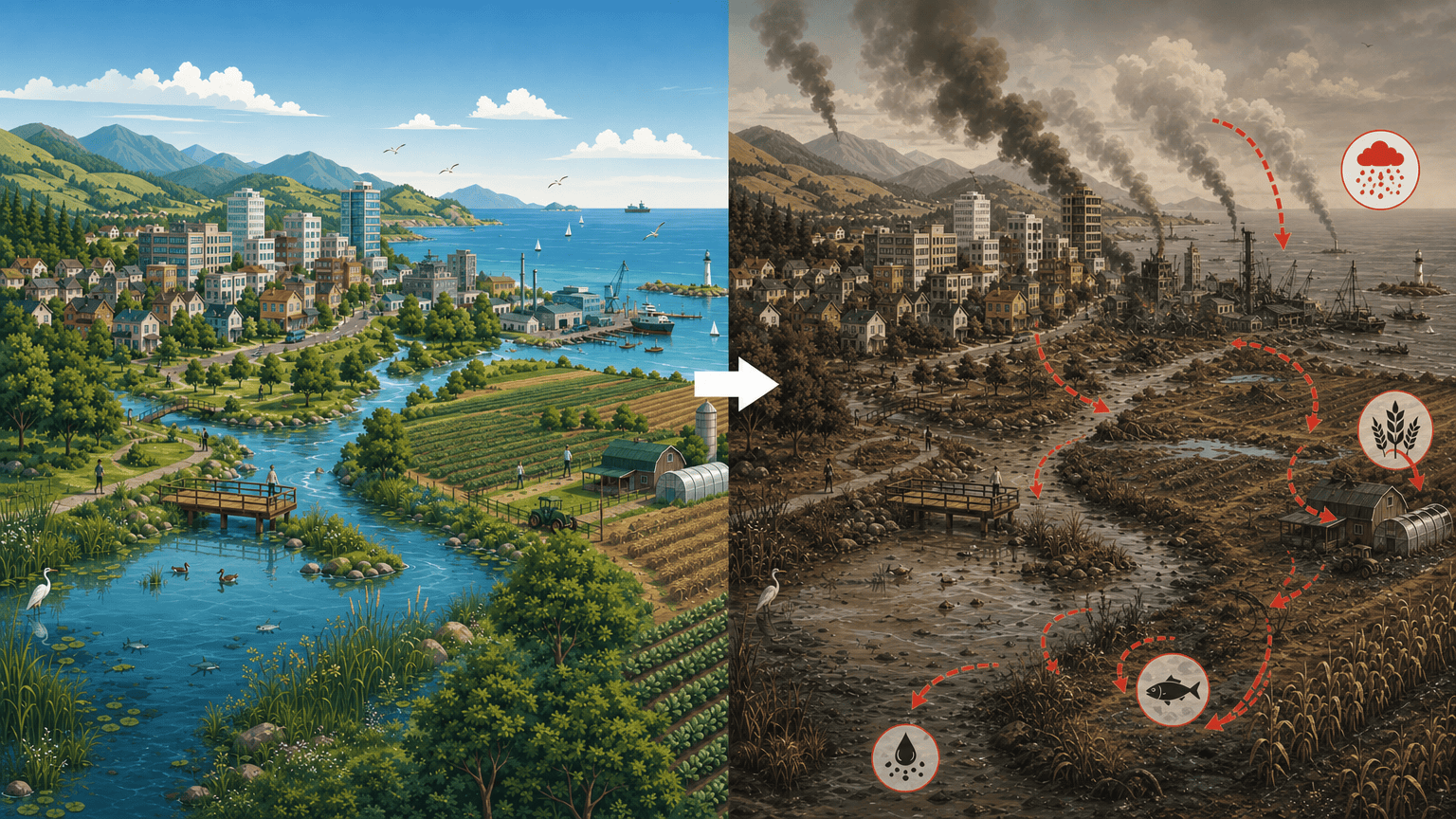
Description: Conflict pollution moves through environmental pathways. Smoke can deposit onto crops, contaminated water can enter irrigation systems, munitions residues can affect soils, and damaged ecosystems can reduce the safety and availability of food, water, fisheries, and local livelihoods.
Real world instances: Gaza, where UN reporting has described severe losses of tree crops, shrubland, and annual crops, along with polluted freshwater and marine ecosystems; Ukraine, where war has damaged farmland, water infrastructure, soils, and ecosystems; Sierra Leone, where post-war accounts describe biodiversity loss and abandoned agricultural fields and swamps.
Military Bases and Forever Chemical Plumes
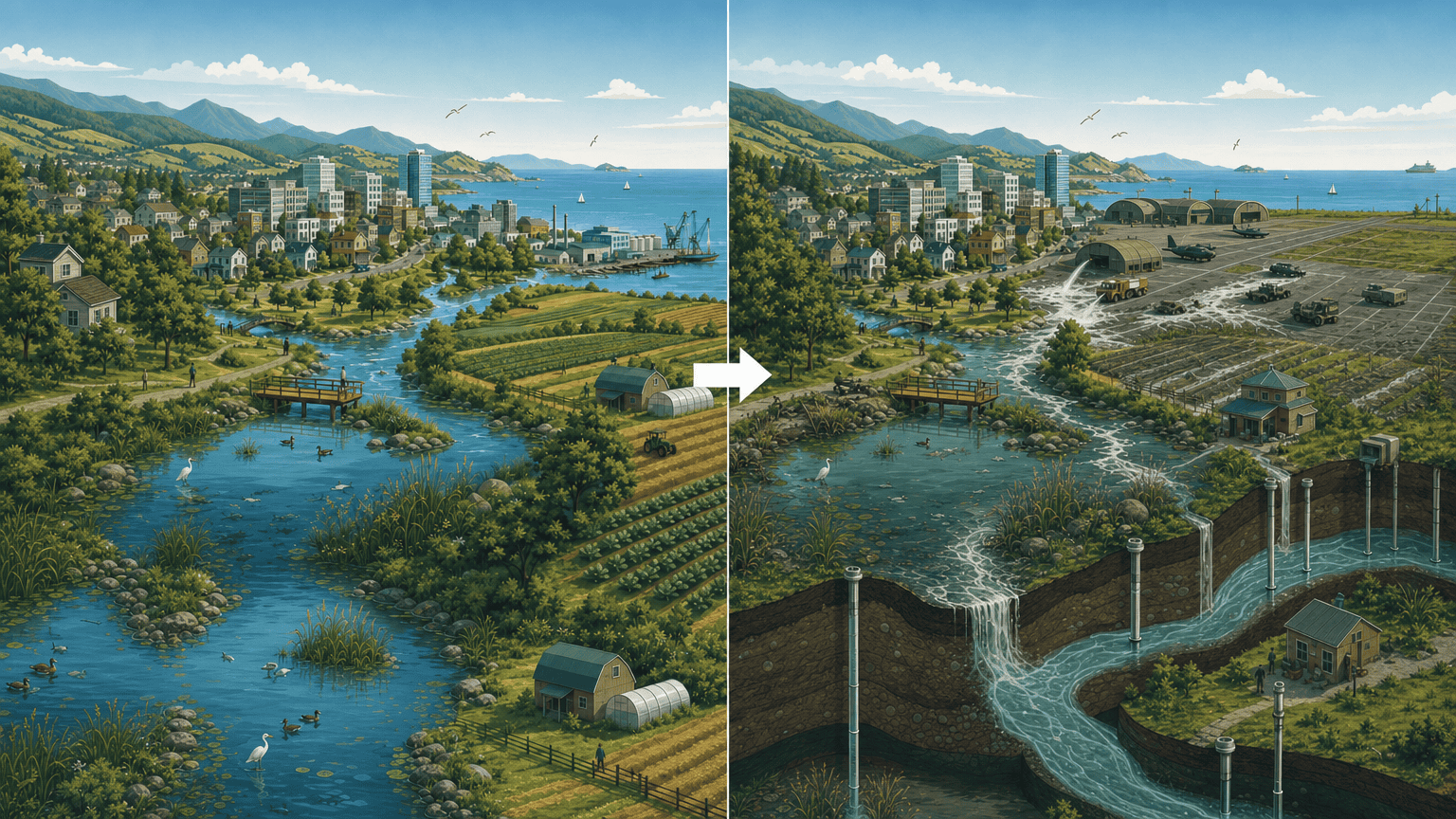
Description: Firefighting foams used for military training and emergencies can release persistent PFAS into soil, groundwater, wetlands, rivers, and drinking-water systems. This pathway is slow, invisible, and long-lasting rather than an immediate battlefield blast.
Real world instances: Ryukyu Islands/Okinawa, Japan: reported PFOS and PFOA contamination in tap water affecting more than 450,000 people in seven municipalities, with Kadena airbase identified as a concern; Current and former United States military bases with PFAS-contaminated sites; Australia: defence sites undergoing PFAS investigation and management.
Radioactive Metal Dust After Impact
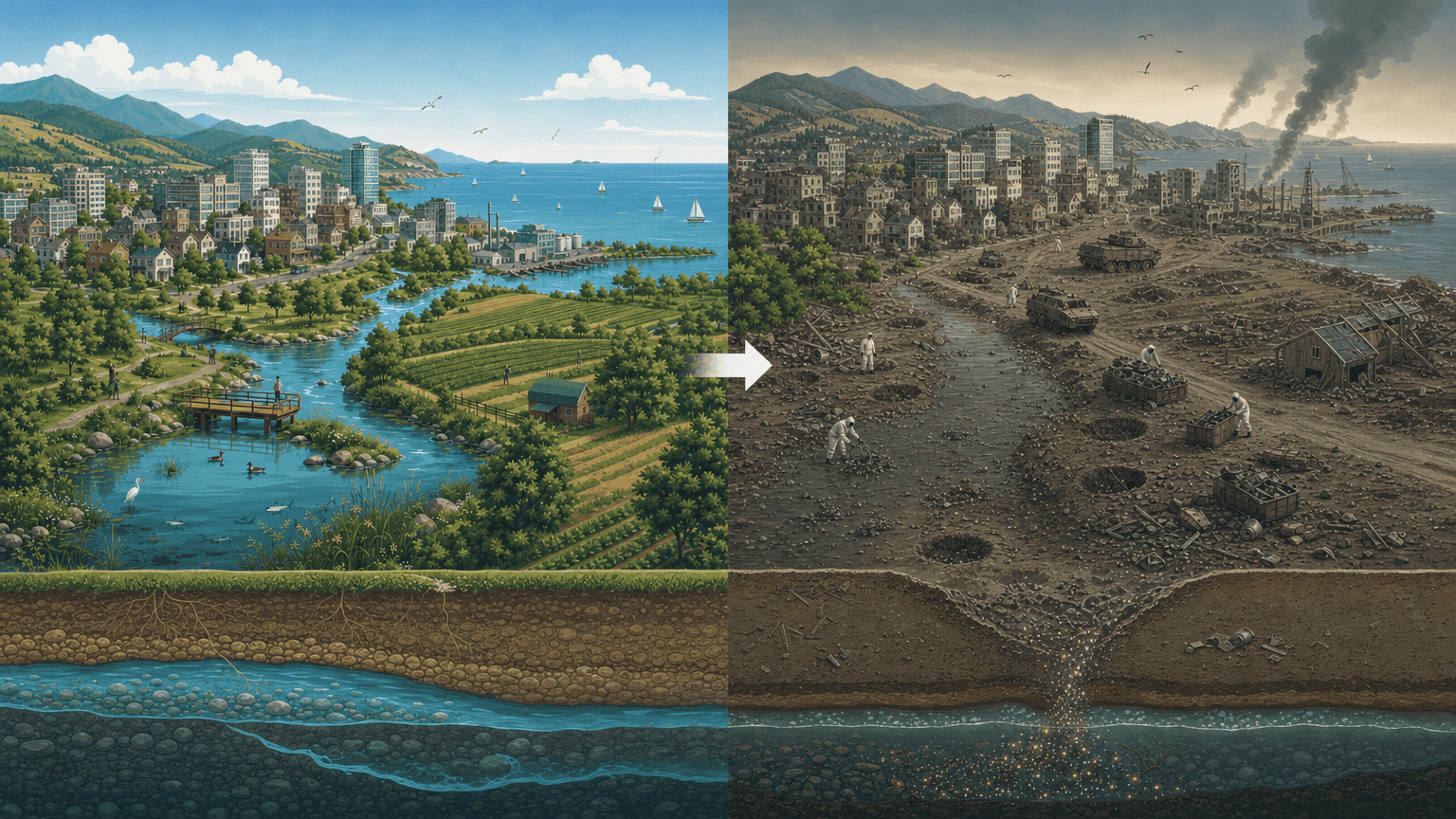
Description: Depleted uranium munitions can leave toxic and radioactive heavy-metal residues. Dust and fragments may contaminate soil and water, posing risks for civilians, first responders, deminers, and scrap workers.
Real world instances: Kosovo, 1999: NATO aircraft fired more than 30,000 depleted uranium rounds, leaving toxic remains with potential groundwater and drinking-water risks; Iraq, 2003: approximately 116,000 kg of depleted uranium were used, with contamination affecting more than 1,000 sites, many in populated areas.
Radioactive Landscapes Across Generations
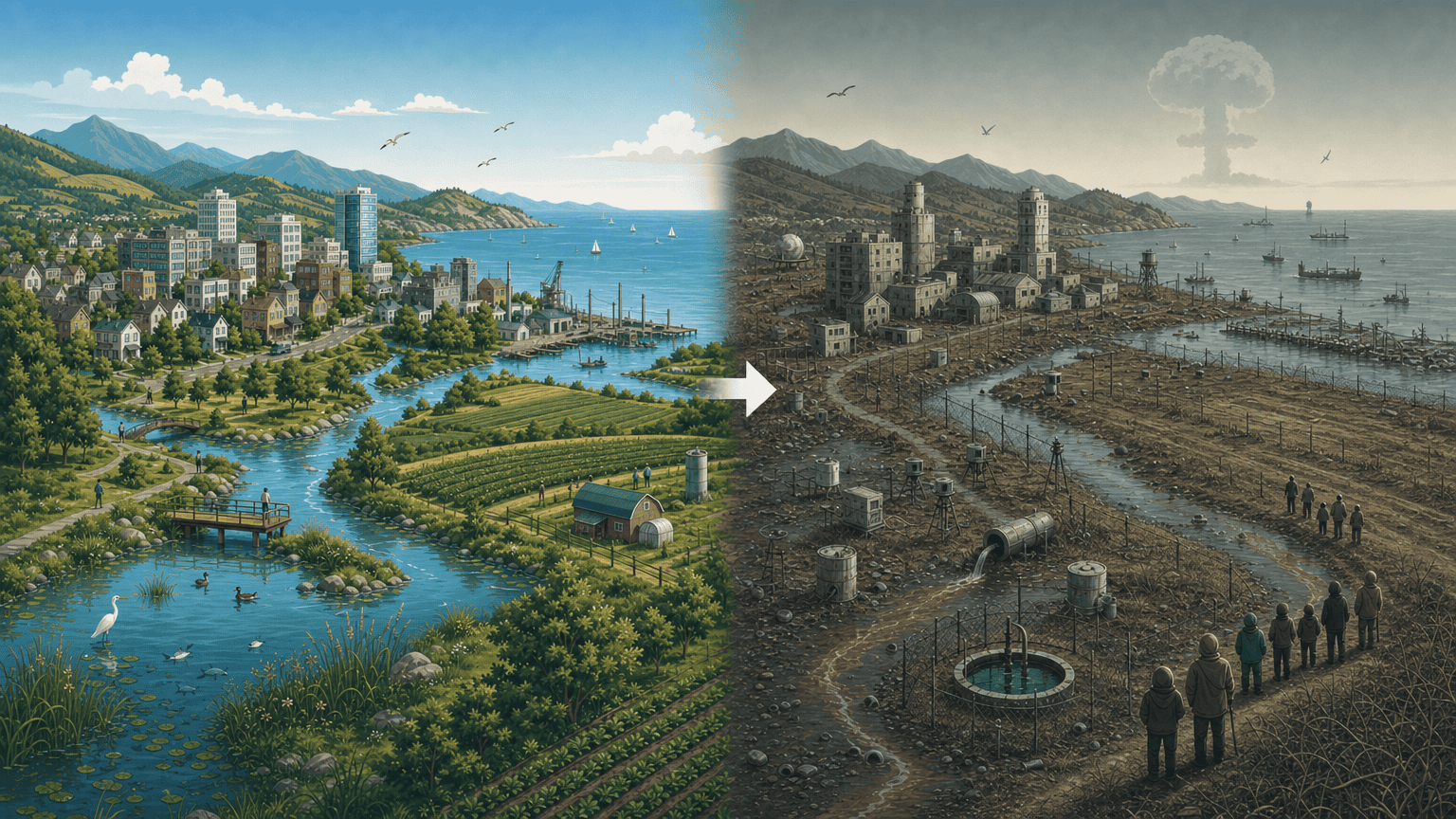
Description: Weapons testing can contaminate land, water, food systems, and culturally significant territories for generations. This pathway shows military pollution that begins before or outside active conflict yet leaves a war-like toxic legacy.
Real world instances: Marshall Islands: 67 nuclear weapons tests by the United States between 1946 and 1958, with lasting cancer and contamination concerns; Maralinga, South Australia: United Kingdom nuclear testing contaminated Tjarutja lands; Algeria and French Polynesia: French nuclear tests with lasting health and environmental concerns; Semipalatinsk, Kazakhstan: more than 500 Soviet nuclear weapons tests left an enduring radioactive legacy.
War Scrap Becomes Hazardous Waste
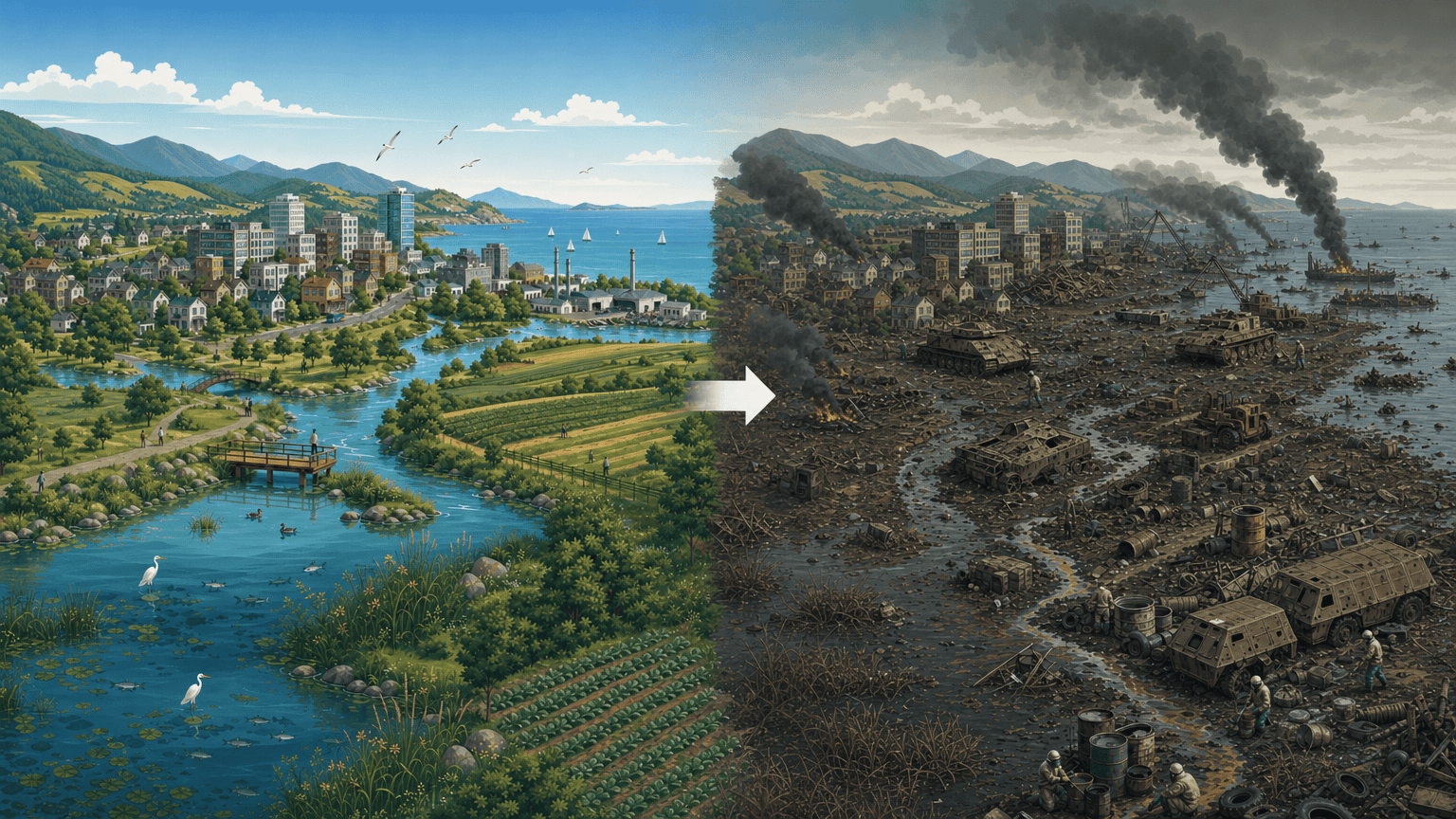
Description: Abandoned military equipment can contain unexploded ordnance, fuels, oils, batteries, heavy metals, electronics, and contaminated dust. Informal dismantling or burning can expose workers and nearby communities.
Real world instances: Iraq: UNEP identified contaminated military scrapyards and environmental hot spots after conflict; Post-conflict zones where damaged vehicles, abandoned equipment, and mixed military scrap are collected or processed without adequate controls.
Toxic Ships and Naval Waste at Sea
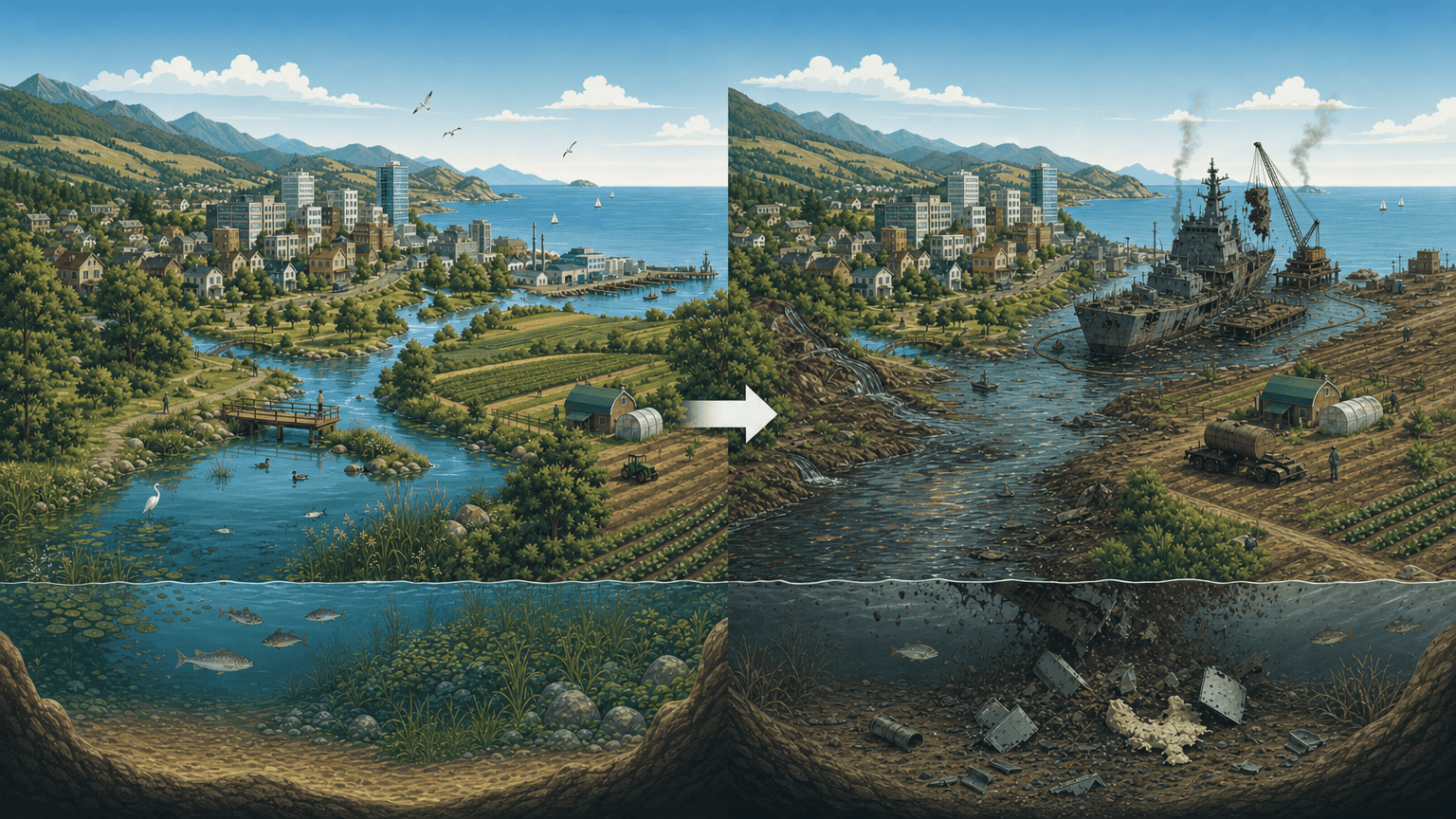
Description: Military vessels can become floating hazardous-waste sites. Ship breaking, sinking, or abandonment can release asbestos, fuels, paints, oils, metals, and other hazardous materials into coastal and marine ecosystems.
Real world instances: French aircraft carrier Clemenceau: asbestos and hazardous-material concerns during attempted dismantling transfer; Brazilian aircraft carrier São Paulo: scuttled in 2023, raising concerns about toxic substances entering the marine environment.
Toxic Defoliation and Damaged Food Landscapes
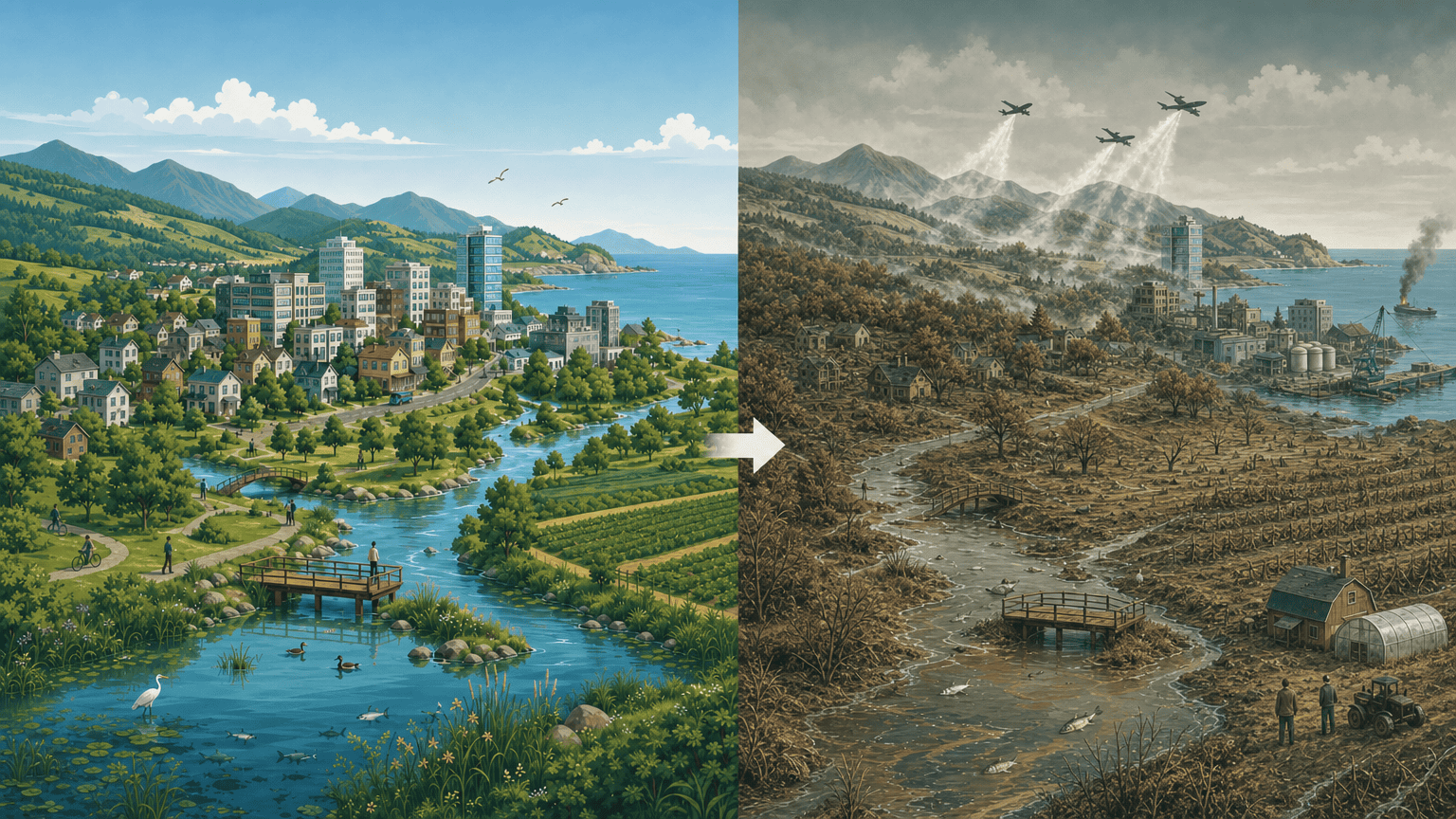
Description: Military or security operations can use herbicides to reshape landscapes, destroy vegetation, or target crops. Drift can affect forests, farms, water, wildlife, and communities beyond the intended zone.
Real world instances: Viet Nam War: Agent Orange and other herbicides defoliated more than 1.25 million hectares of forest; Colombia, 1994–2015: more than 1.8 million hectares were sprayed with glyphosate during coca-eradication operations.
Incendiary Weapons, Toxic Smoke, and Burned Land
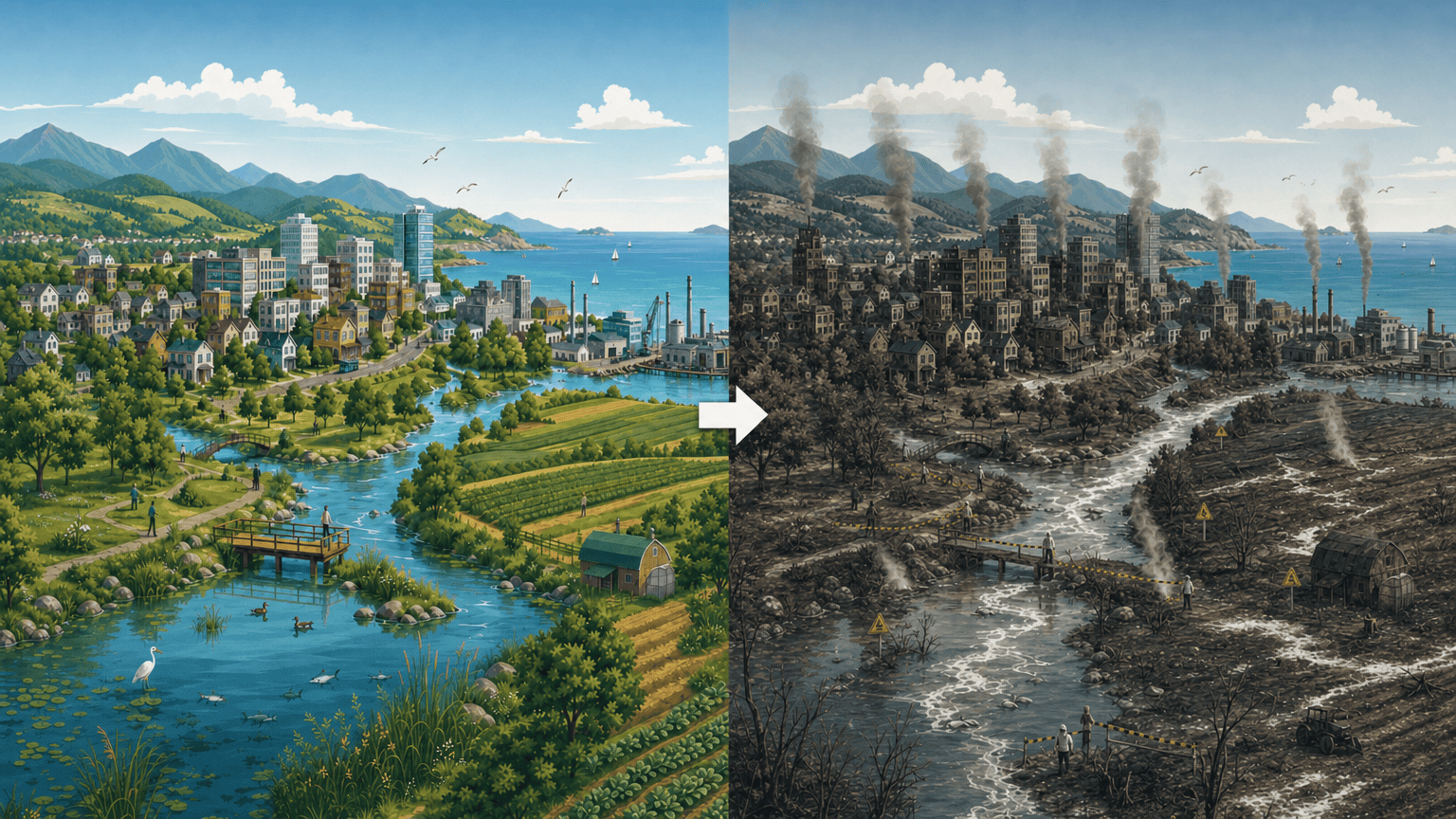
Description: Incendiary substances can ignite vegetation, buildings, and fields while leaving hazardous residues in soil and water. The pathway is both acute fire and chronic contamination that can make return unsafe.
Real world instances: Lebanon: experts warned about widespread white phosphorus deployment, booby-trapped homes and fields, and unexploded ordnance making villages and farmland unsafe for return.
Fields That Cannot Safely Be Farmed
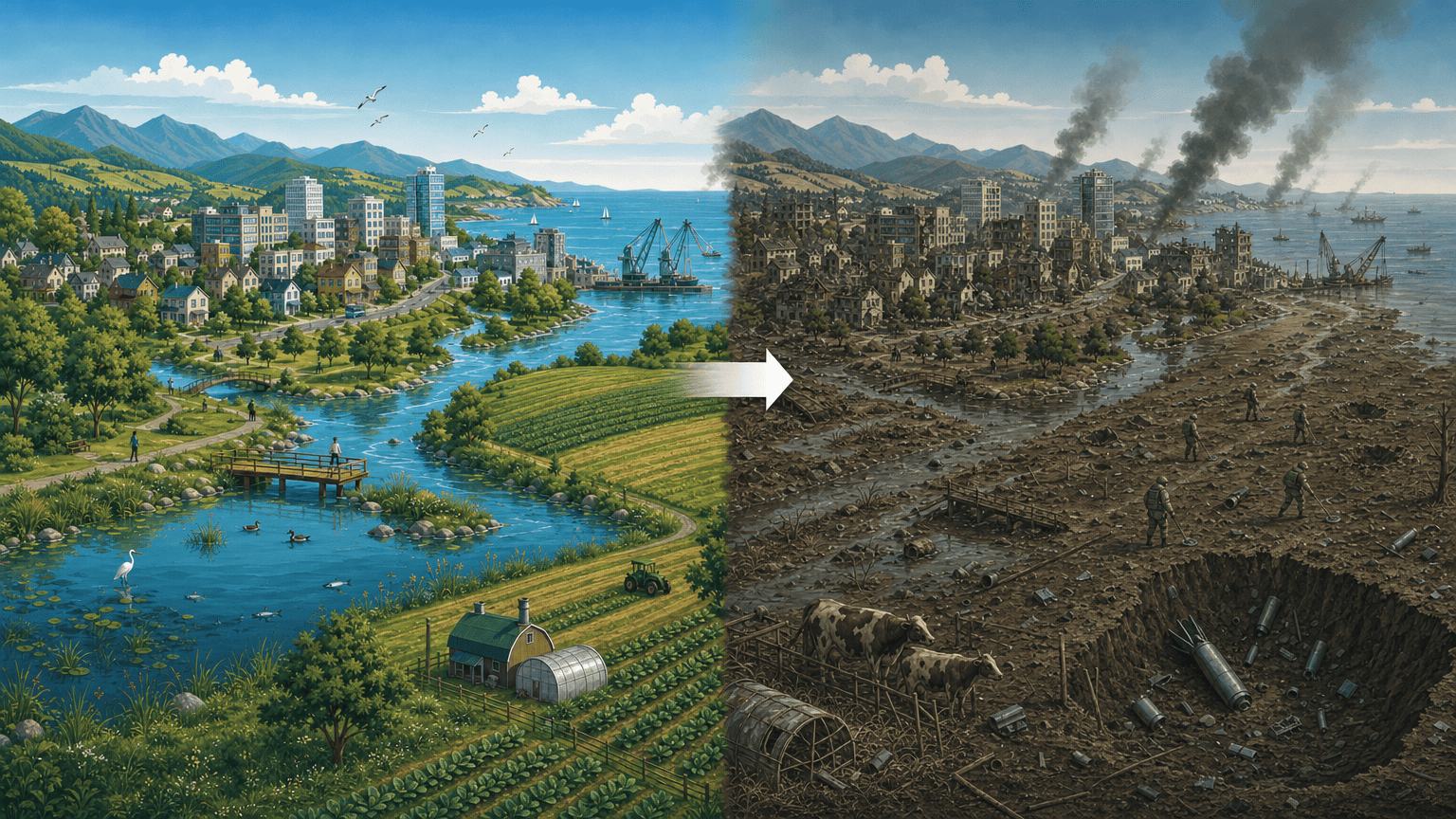
Description: Cluster munitions and landmines turn productive landscapes into long-term danger zones. Beyond explosive risk, metal fragments and explosive compounds can contaminate soils and reduce land fertility.
Real world instances: Gaza agricultural lands affected by wars and heavy-metal contamination associated with munitions; Madama, Niger: landmines from the Second World War remain near the town; Ukraine: continuing landmine risks amid conflict and demining efforts.
The Seafloor as a Forgotten Dump Site
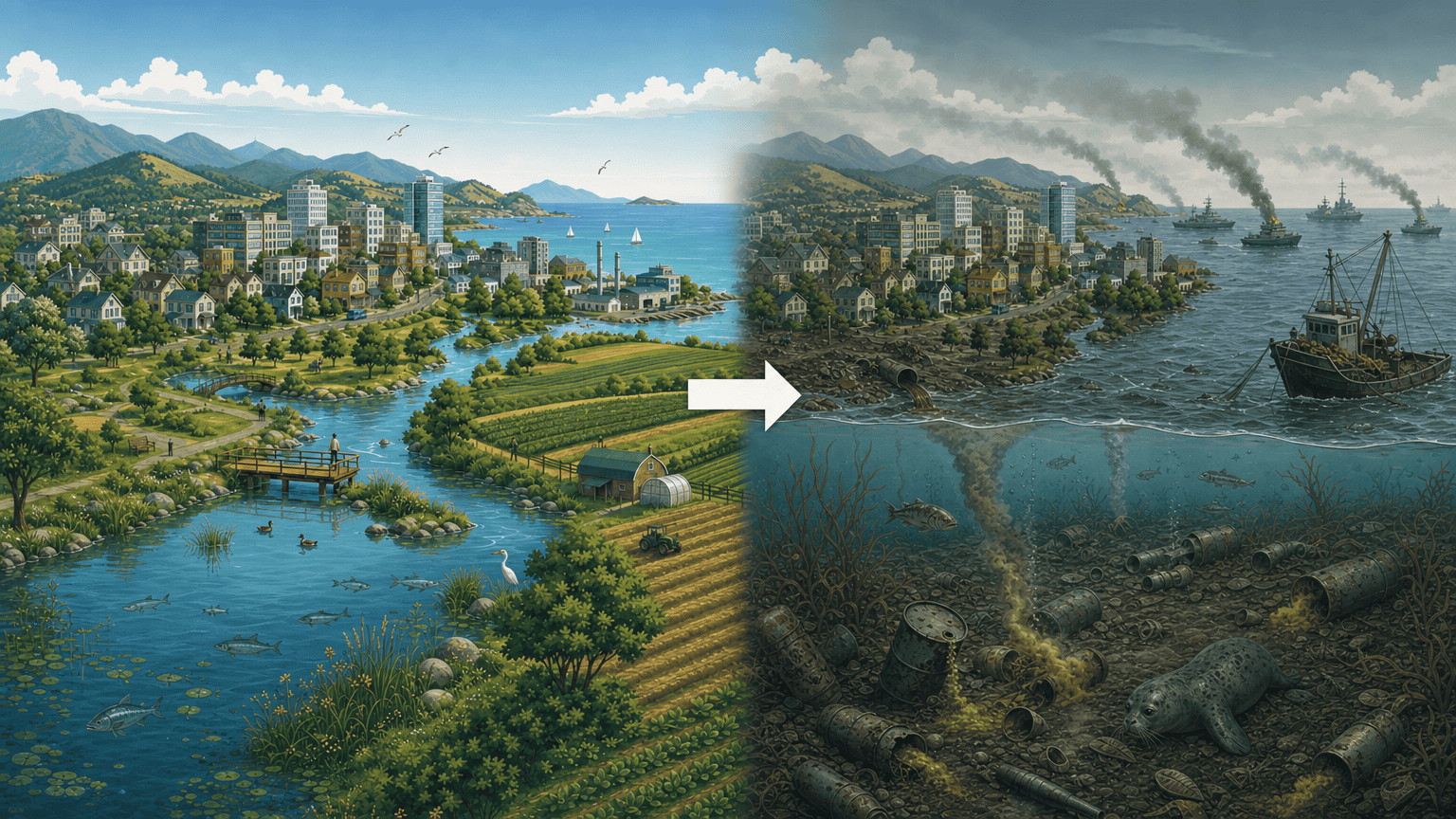
Description: Sunken munitions and military vessels can corrode over decades, releasing explosives, metals, fuels, and other toxics into sediments and marine food webs.
Real world instances: North Sea and Baltic Sea: estimated 1.6 million tonnes of World War munitions remain on the seafloor; Eagle River estuary, Alaska: more than 10,000 unexploded munitions threaten beluga whales, waterfowl, and salmon.
Open Burning at Military Sites
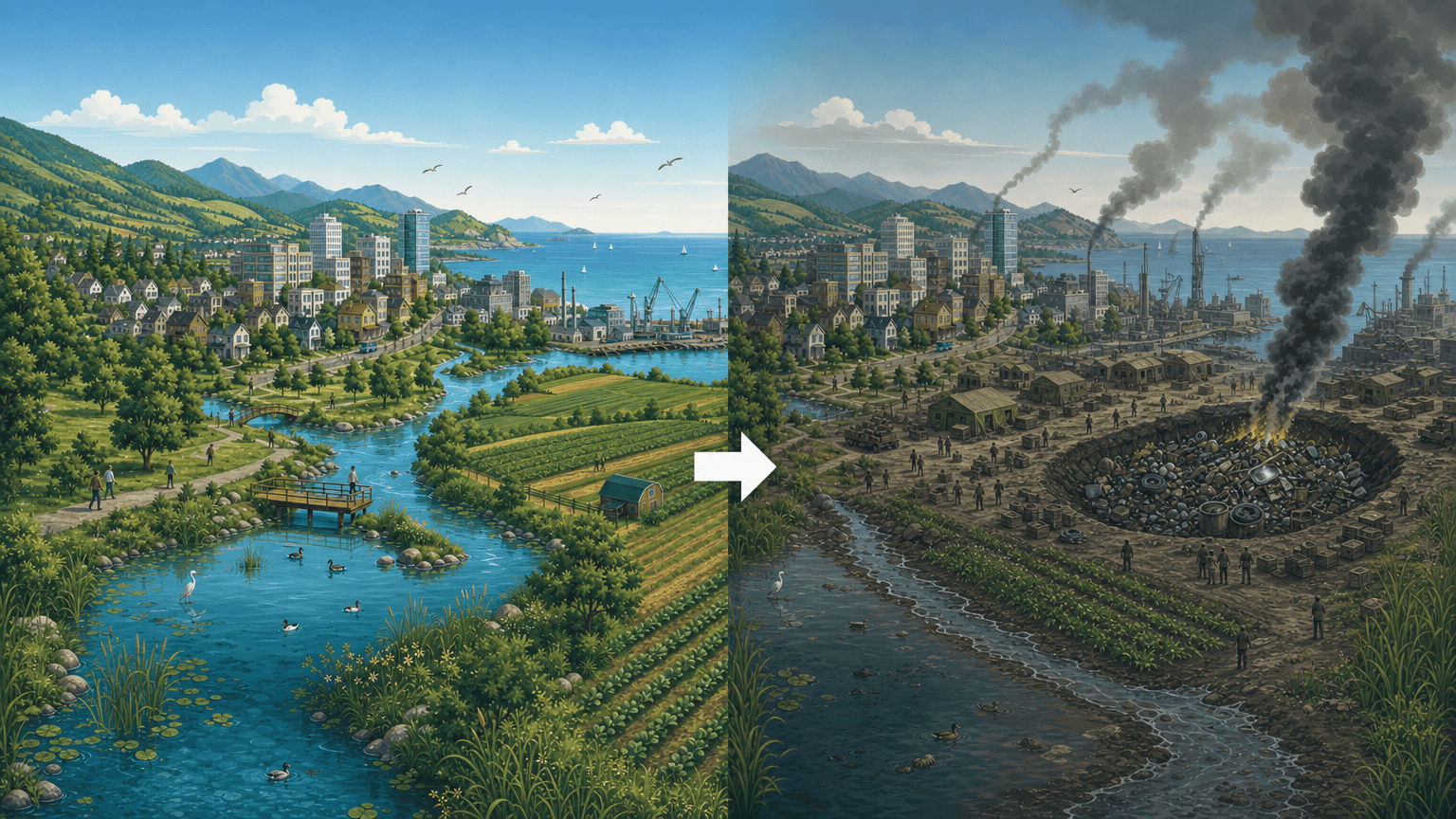
Description: Waste burned at military sites can release mixed toxic fumes from plastics, fuels, chemicals, metals, medical waste, electronics, and other materials. The exposure pathway affects deployed personnel and nearby communities.
Real world instances: Open burn pits at deployed military sites associated with respiratory, cardiovascular, neurological, and cognitive health concerns among veterans; Gulf War exposures to smoke and fumes from Kuwait oil well fires.
Factories as Conflict Pollution Hot Spots
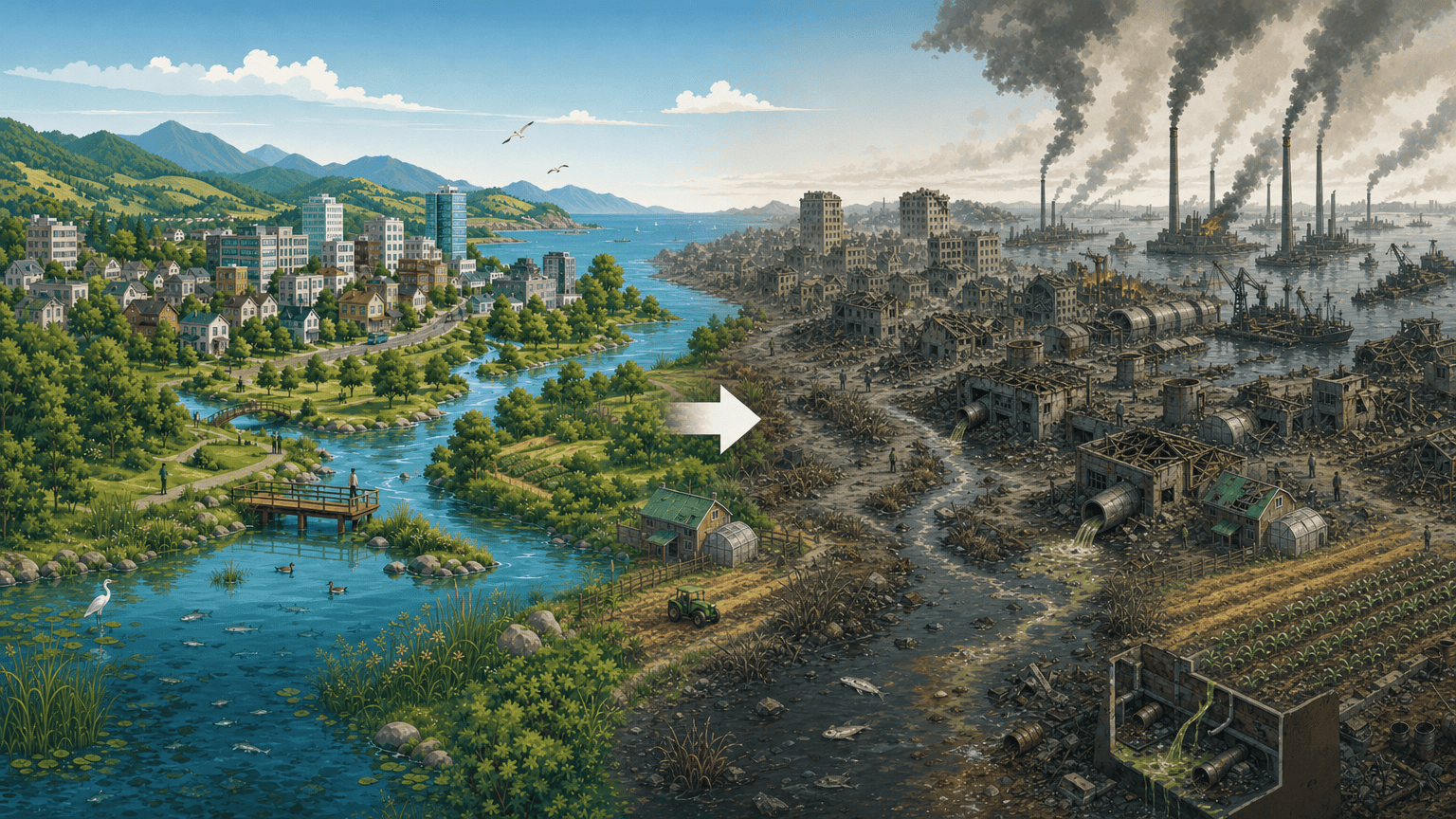
Description: When industrial sites are bombed, damaged, or lose power, stored chemicals and legacy pollution can be released into air, soil, water, and sediments. War can compound pre-existing industrial contamination.
Real world instances: Azovstal plant, Mariupol, Ukraine: historic steelmaking pollution compounded by munitions emissions, explosive damage, and asbestos-containing materials; Avdiivka, Ukraine: shelling-related fire at an industrial plant caused a major coke gas leak in 2015; Khartoum, Sudan: fighting since April 2023 damaged more than 400 hazardous industrial sites; fires at Al-Jili oil refinery drove a 300 km smoke plume over the city.
War as Climate Pollution
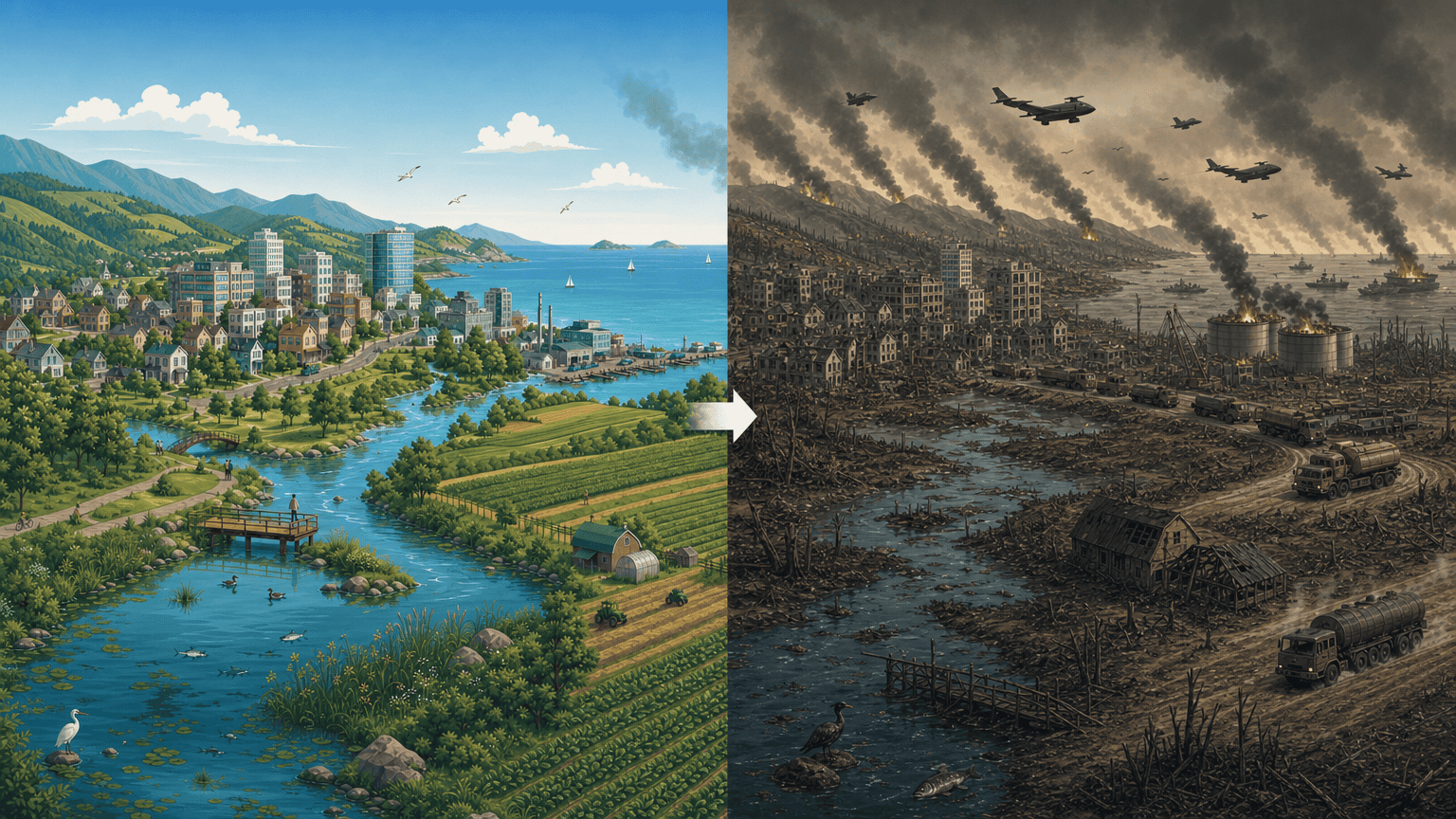
Description: Military operations consume large amounts of fuel and can destroy carbon sinks through fires, explosions, land clearance, and forest burning. Conflict adds greenhouse gases while weakening ecosystems that store carbon.
Real world instances: Global militaries: estimated combined carbon footprint roughly 5.5 percent of the global total; Gulf War: Kuwaiti oil well fires released large quantities of carbon dioxide, sulphur dioxide, and nitrogen oxides, with black rain reported as far as Iraq, Iran, and Türkiye; Ukraine: attacks on oil depots and refineries and forest burning contribute to the toxic and climate legacy of war.
Sources:
- United Nations, “How conflict impacts our environment”
- United Nations, “International Day for Preventing the Exploitation of the Environment in War and Armed Conflict”
- United Nations, “Military activities and toxics - Report of the Special Rapporteur
- United Nations Environment Programme (UNEP), “UNEP statement on environmental damage arising from the conflict in the Middle East”
- United Nations Office at Geneva, “Battlefields to wastelands: UN warns conflicts are destroying ecosystems worldwide”
Why And Pollution? To identify actions:
|
|
Food System
|
|
Air
|
|
Freshwater
|
|
Chemical
|
|
Ciruclarity
|
|
|
Financial
|
|
Marine
|
|
Soil
|
|
Transport
|
|
Solid Waste
|